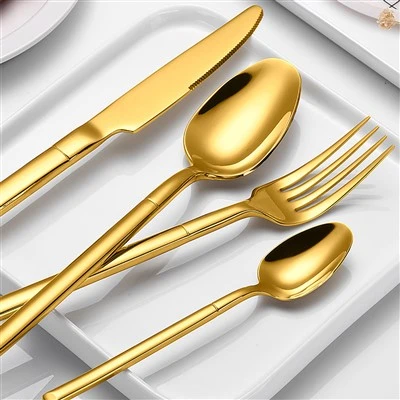
Does frosted matte finish of the cutlery hide scratches?
Oct 11, 2026
The science of light scattering explains why a satin or matte surface keeps its good looks far longer than a mirror polish.
Stainless steel cutlery is available in a spectrum of surface finishes, from brilliant mirror polish to soft satin and frosted matte. Each finish has its own aesthetic and practical characteristics, but one question consistently arises among buyers and users: does a frosted matte finish hide scratches? The answer is a definitive yes - and the reason lies in the physics of light reflection. Understanding how matte surfaces interact with light reveals why they are the smart choice for everyday flatware that must withstand the rigours of daily use.
1. The Optical Principle: Specular vs. Diffuse Reflection
The visibility of a scratch depends entirely on how it disrupts the reflection of light. A mirror-polished surface has extremely low surface roughness (Ra less than 0.1 micrometres). Light striking this surface reflects in a single, coherent direction - a phenomenon called specular reflection. The result is a sharp, bright image. When a scratch interrupts this uniformity, it scatters light in a different direction, creating a high-contrast line that the human eye detects instantly.
A frosted matte finish, by contrast, has a rougher surface (Ra 0.5-2.0 micrometres) composed of microscopic peaks and valleys. Light hitting this surface is scattered in many directions - diffuse reflection. There is no single coherent image to disrupt. When a new scratch is added, it simply scatters light into an already scattered field. The optical signal of the scratch is lost in the background noise. In essence, a matte finish hides scratches by making the entire surface behave like a collection of tiny scratches.
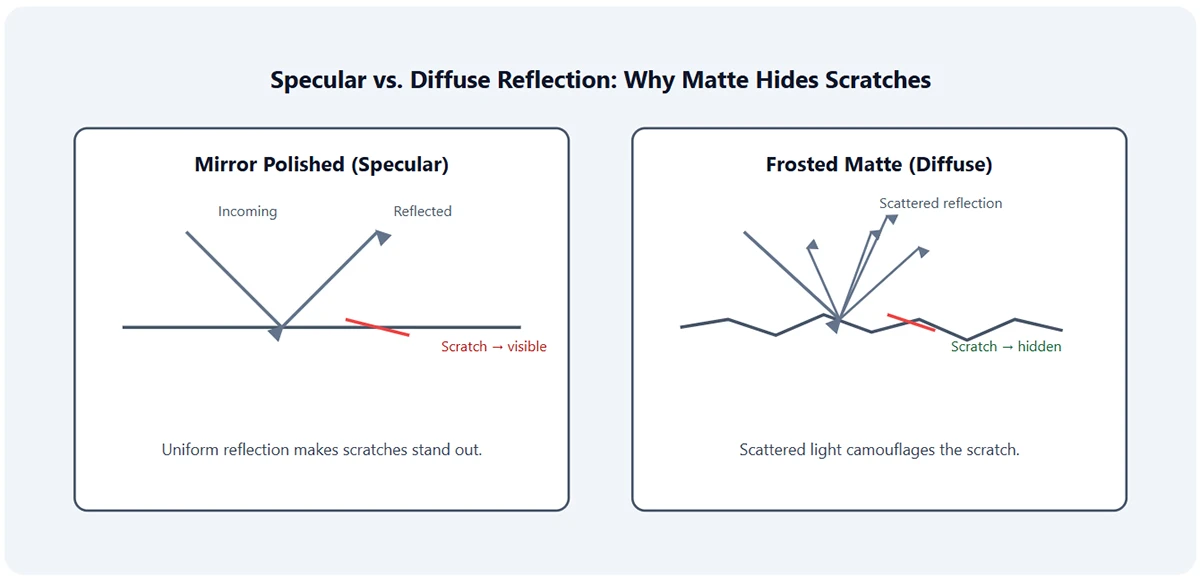
Figure 1: Specular reflection on a mirror finish makes scratches highly visible, while diffuse reflection on a matte finish conceals them.
2. What Kind of Scratches Are Hidden - and Which Are Not
A matte finish is not a magic shield. It hides shallow, everyday micro-scratches extremely well. These are the fine abrasions caused by normal use: sliding across ceramic plates, rubbing against other cutlery in a drawer, or being cleaned with a slightly abrasive sponge. Because these scratches are shallow relative to the texture of the matte surface, they blend in completely.
However, deep scratches - those that penetrate significantly into the metal, create a visible burr, or expose a different colour underneath - can still be seen on a matte finish. They may appear as slightly darker or lighter lines depending on the lighting angle, but they are far less conspicuous than on a mirror finish. The most serious damage, such as gouges or dents, will be visible on any surface. The advantage of matte is that it raises the threshold of what constitutes a "visible" scratch, allowing your cutlery to look newer for much longer.
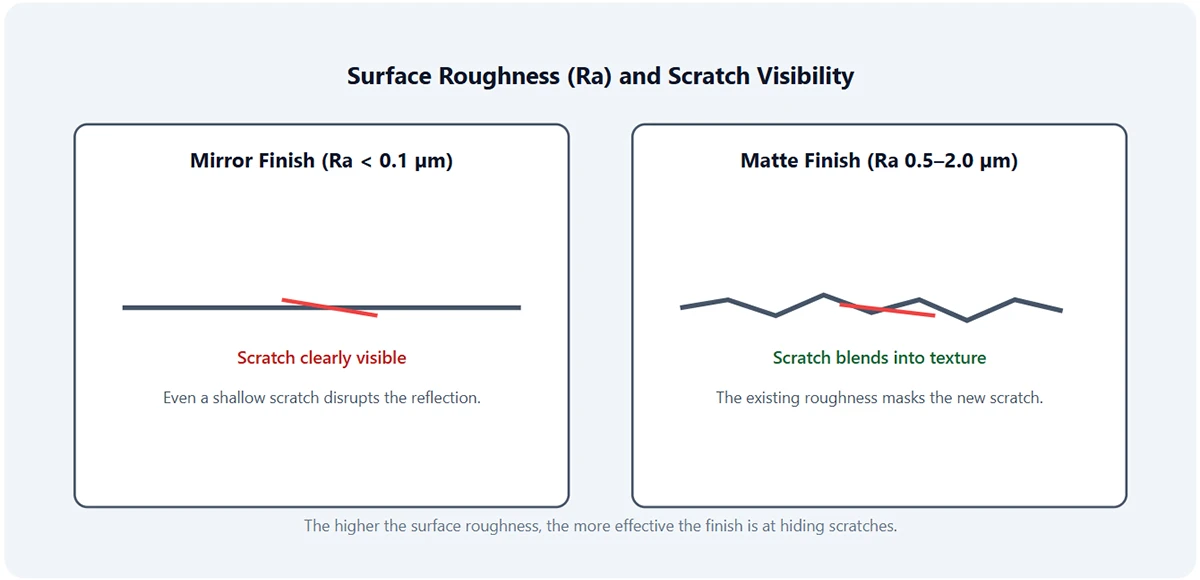
Figure 2: Surface roughness comparison. A matte finish's inherent texture provides a background that conceals new scratches.
3. Practical Trade-Offs of Matte Finishes
While matte finishes excel at hiding scratches, they come with a few trade-offs worth considering. Cleaning is slightly more involved because the microscopic texture can trap food residues, particularly starchy or oily substances. A soft brush is more effective than a smooth sponge. Water spots are generally less visible on matte than on mirror, but hard-water minerals can leave a chalky film that is harder to remove. Fingerprints are far less conspicuous on matte, which is a major advantage for busy households and restaurants. Finally, matte finishes cannot be restored to a mirror shine by polishing; the texture is intrinsic to the surface. If you prefer a brilliant reflection, you must choose a mirror finish and accept its higher maintenance.
4. Care Recommendations for Matte Cutlery
To keep matte cutlery looking its best, follow these simple guidelines. Hand wash with mild, pH-neutral dish soap and a soft sponge or microfiber cloth. Dry immediately with a clean towel to prevent water spots. If using a dishwasher, select a low-alkaline detergent and turn off the heated drying cycle; remove the cutlery promptly and hand-dry. Avoid abrasive cleaners, steel wool, and chlorine bleach, which can damage the passive layer and create deeper scratches. Store pieces in individual slots to prevent metal-on-metal rubbing that can wear the texture unevenly. A monthly soak in a 10% citric acid solution (15-20 minutes) helps maintain the passive chromium oxide layer and removes mineral buildup without affecting the matte finish.
Frequently Asked Questions (FAQ)
Q1: Does a matte finish really hide scratches better than a mirror finish?
Yes, significantly. A matte finish scatters light in many directions, so a scratch blends into the diffuse reflection. A mirror finish reflects light uniformly, making every scratch appear as a stark, high-contrast line.
Q2: Can deep scratches still be seen on matte cutlery?
Deep scratches that expose the underlying metal or create a raised burr can still be visible on matte finishes, but they are far less conspicuous than on polished surfaces. Shallow, everyday micro-scratches are effectively camouflaged.
Q3: Is matte cutlery harder to clean?
Matte finishes have a slightly rougher surface (Ra 0.5-2.0 µm) that can trap food particles more than mirror finishes. However, with normal dishwashing and a soft brush, they clean effectively. The trade-off is worth it for scratch hiding.
Q4: Does matte finish show water spots more than mirror finish?
Matte finishes tend to show water spots less than mirror finishes because the diffuse reflection masks the mineral deposits. However, hard water can leave a chalky film that is more noticeable on matte than on polished surfaces.
Q5: How should I care for matte finish cutlery to maintain its appearance?
Hand wash with mild soap and a soft sponge, dry immediately, and avoid abrasive cleaners or steel wool. For dishwashers, use low-alkaline detergent and skip the heated dry cycle. Store in individual slots to prevent metal-on-metal rubbing.