

Why does stainless steel rust in the dishwasher?
Jun 16, 2026
The surprising chemistry behind orange spots on your knives, forks, and spoons - and how to stop it
You load the dishwasher, run a cycle, and open the door expecting sparkling clean cutlery. Instead, you see ugly orange‑brown spots on your "stainless" steel knives, forks, and spoons. How can stainless steel rust? The answer lies in the aggressive environment inside a dishwasher: high heat, strong detergents, and - most critically - chloride ions. This article explains the electrochemistry of why stainless steel is not truly "rust‑proof", the specific conditions inside dishwashers that trigger corrosion, and practical steps you can take to keep your flatware spotless. Five frequently asked questions at the end address common concerns.
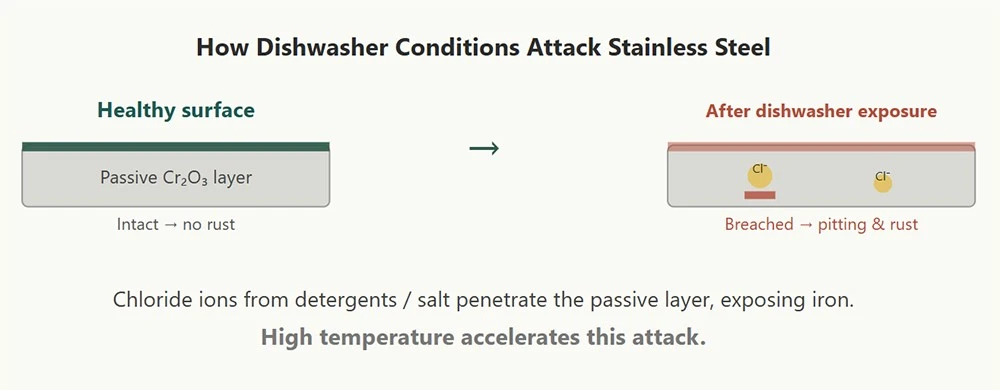
Figure 1: Dishwasher detergents release chloride ions that breach the protective chromium oxide layer, leading to pitting and red rust.
1. The myth of "stainless" - understanding the passive layer
Stainless steel contains at least 10.5% chromium, which forms an invisible, self‑repairing chromium oxide (Cr₂O₃) film on the surface. This film blocks oxygen and moisture from reaching the iron underneath. However, the film is not invincible. In aggressive environments - high temperatures, alkaline detergents, and especially chlorides (Cl⁻) - the film can break down locally. Once a breach occurs, the iron begins to oxidize, forming red rust (Fe₂O₃). The rust itself is porous and retains moisture, accelerating further corrosion. Dishwashers create a perfect storm: heat (50‑75°C), strong alkaline detergents, and often chlorine‑based bleach or salt residues.
2. The main culprit: Chlorides from detergents and salt
Many automatic dishwasher detergents contain sodium hypochlorite (bleach) or other chlorine compounds. Even "chlorine‑free" tablets may contain potassium chloride or other chloride salts. Additionally, if your dishwasher has a built‑in water softener that uses sodium chloride (table salt), any leakage or overfilling can leave chloride residues. Chloride ions are tiny and highly aggressive: they migrate through microscopic defects in the passive layer and catalyze the breakdown. This is why you often see rust starting at scratches, edges, or the junction between handle and bowl. Once a pit forms, the local environment becomes even more acidic and chloride‑rich, causing the pit to deepen - a process called pitting corrosion.
3. Galvanic corrosion - when cutlery touches other metals
Another common cause of rust in dishwashers is galvanic corrosion. If a stainless steel spoon touches a carbon steel knife, an aluminum pan, or even a different grade of stainless steel, an electrochemical cell forms in the wet, hot environment. The less noble metal corrodes, and the stainless steel can also develop superficial rust. This is why you should never mix stainless steel cutlery with carbon steel objects in the dishwasher. Use plastic‑coated cutlery baskets and avoid overcrowding that forces metal‑on‑metal contact.
4. Low‑grade steel: 18/0 and 201 are most vulnerable
Not all stainless steel is created equal. Cutlery made from 18/0 (no nickel) or 201 (low nickel, high manganese) has much lower corrosion resistance. These grades are magnetic and will rust rapidly in dishwashers - sometimes after just a few cycles. 18/10 (304) is far better, and 316 (marine grade) is the best for coastal homes or heavy dishwasher use. If your cutlery is unmarked or says "18/0", rust is inevitable over time. Upgrading to 18/10 is the most effective long‑term solution.
⚠️ High rust risk
-
18/0 (430) - no nickel
-
201 - low nickel
-
Unstamped "stainless"
✅ Low rust risk
-
18/10 (304) - 10% nickel
-
316 - with molybdenum
-
18/8 - acceptable
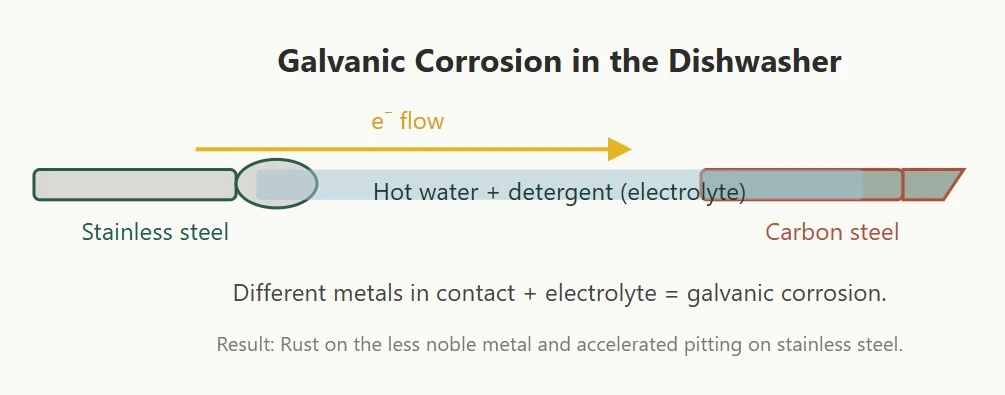
Figure 2: When stainless steel cutlery touches a different metal (e.g., carbon steel knife) in wet conditions, galvanic corrosion occurs - often causing rust spots on both.
5.How to prevent rust in the dishwasher: 7 practical steps
-
Choose low‑chloride detergent: Look for "chlorine‑free", "plant‑based", or "phosphate‑free" tablets. Avoid powders with bleach.
-
Use rinse aid: Rinse aid helps water sheet off cutlery, reducing droplet formation that concentrates chlorides.
-
Run the heated dry cycle - or dry cutlery by hand immediately after the cycle ends.
-
Separate different metals: Use plastic cutlery baskets and avoid mixing stainless steel with carbon steel, aluminium, or silver.
-
Pre‑rinse salty or acidic foods: Remove tomato sauce, vinegar dressings, and salty residues before loading.
-
Upgrade to 18/10 or 316 stainless steel: If your cutlery is 18/0, consider replacing it - the savings in frustration are worth it.
-
Periodic passivation: Once a year, soak all cutlery in a 5% citric acid solution (or white vinegar) for 20 minutes, then rinse and dry. This restores the passive layer.
6. What about black spots or rainbow film?
Not every discoloration is rust. Black spots are often manganese deposits or mold; rainbow film (iridescent) is a harmless oxide layer from high heat. Rust is distinctly orange‑brown and powdery. If you wipe the spot with a lemon juice‑damp cloth and it disappears, it's not rust. If it remains, it's corrosion. This distinction helps you choose the right cleaning method.
7. Can pitted cutlery be saved?
Once a pit has formed, you cannot reverse it. Light pitting may be smoothed with polish, but the cavity remains. Deep pits are hygienic concerns (bacteria hide in crevices) and can weaken the metal. Retire heavily pitted spoons or forks. For expensive sets, you may be able to buy replacement pieces from the manufacturer.
8. How grade affects dishwasher safety - summary table
-
18/0: Not recommended - rusts quickly in dishwashers. Hand wash only.
-
18/8: Acceptable for occasional dishwasher use, but may pit over years.
-
18/10: Good for regular dishwasher use - choose low‑chloride detergents.
-
316: Excellent - withstands aggressive detergents and salty conditions.
❓Frequently Asked Questions
Q1: Is it safe to use the dishwasher with 18/10 stainless steel cutlery?
A:Yes, 18/10 is generally dishwasher safe. However, to prevent long‑term pitting, use a mild, chlorine‑free detergent, rinse aid, and the heated dry cycle. Avoid overloading and leaving cutlery wet for hours. With proper care, 18/10 can withstand thousands of cycles.
Q2: Why does my new stainless steel cutlery have rust spots after the first wash?
A:This often indicates the cutlery is low‑grade (18/0) or has manufacturing residue. Some new pieces have free iron on the surface from polishing. Try a passivation soak (citric acid) to remove it. If rust reappears, the steel is substandard - return it.
Q3: Can I use vinegar or lemon juice to remove rust from cutlery?
A:Yes, mild acids can dissolve light surface rust. Soak for 10‑15 minutes, then scrub with a soft sponge. However, acid alone will not restore the passive layer; follow with a baking soda paste rinse and thorough drying. For deep pits, acid is ineffective.
Q4: Does the "heated dry" cycle help or hurt?
A:It helps significantly. The heat evaporates water quickly, preventing chloride‑rich droplets from sitting on the metal. Without heated dry, cutlery remains wet for much longer, promoting corrosion. Always use the heated dry option if available.
Q5: Can I put stainless steel cutlery in the dishwasher with other metals?
A:Avoid direct contact. Use separate cutlery baskets or compartments. Do not mix with carbon steel knives, aluminium utensils, or silverware. Also, avoid placing cutlery against stainless steel sink baskets if they have worn coating - the bare metal can cause galvanic transfer.
Conclusion: Prevention is easier than cure
Stainless steel rust in the dishwasher is not inevitable - it is a predictable result of chlorides, heat, and moisture attacking the passive layer. By understanding the science, choosing the right grade (18/10 or 316), using chloride‑free detergents, and adopting good drying habits, you can keep your knives, forks, and spoons rust‑free for decades. The small changes in your routine will save you from the frustration of replacing pitted cutlery. Respect the passive layer, and it will protect you.
AOFFEE is a China manufacturer of high‑quality stainless steel cutlery. Our 18/10 forged knives, forks, and spoons meet ISO9001/ISO 8442,NSF,BS OHSAS 18001 standards, feature satin finishes, and are designed to fit ergonomic preferences. We offer competitive pricing and bulk discounts for professionals.Request a sample or view our full collection.
Related products


